
At some point, every homeowner faces the same decision: paint the space personally or hire a professional painter.
At first glance, the choice seems simple. DIY painting appears cheaper, while professional painting promises convenience and quality. In reality, the decision involves several factors, including cost, time commitment, skill level, preparation work, and the finish quality you want to live with for years.
This guide compares DIY and professional painting across the areas that matter most: cost, time, durability, tools, and results. Whether the project is a single room or an entire home repaint, understanding these trade-offs helps determine which option makes the most sense.
Time Investment Compared
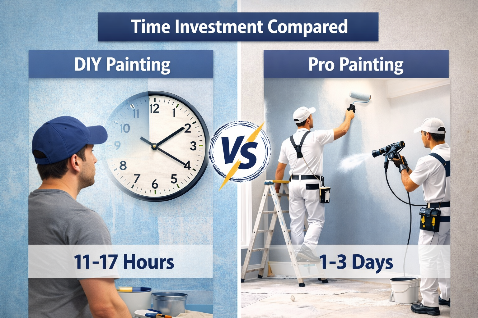
DIY Painting Timeline
Painting a single room involves more than applying paint. Preparation, drying time, and cleanup significantly extend the timeline.
Typical DIY timeline:
- Surface preparation: 3–5 hours
- First coat: 1.5–2.5 hours
- Drying time: 4–6 hours
- Second coat: 1.5–2 hours
- Touch-ups and cleanup: 1–2 hours
Total time: roughly 11–17 hours per room.
Painting an entire home interior may require two to four weekends of work.
Professional Painting Timeline
Professional crews complete the same bedroom in four to six hours. A three-bedroom home interior usually takes two to three working days, while exterior projects often take three to five days.
The speed difference comes from experience, teamwork, and specialized equipment.
Why Time Matters
During painting projects, furniture is moved, rooms are inaccessible, and daily routines are disrupted. Compressing the work into a few days rather than several weekends can be a major practical advantage.
Quality and Finish Expectations
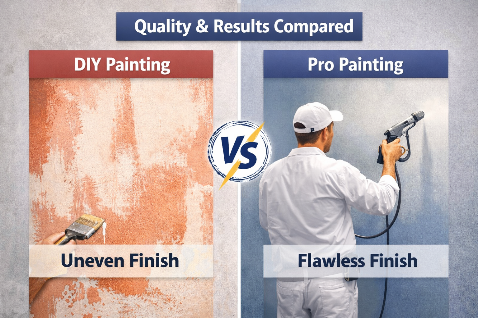
Professional Finish
Professional painters deliver smooth walls, consistent coverage, and sharp edges around trim and ceilings. Proper technique prevents common issues such as roller marks, uneven coverage, and visible lap lines.
Typical DIY Results
Careful DIY painters can achieve good results, particularly on smooth walls in good condition. However, uneven edges, inconsistent coverage, and visible brush strokes are common among inexperienced painters.
Where Quality Differences Matter
Quality differences are most noticeable in living rooms, open spaces, and ceilings, where lighting highlights imperfections. In less visible areas such as garages or utility rooms, the difference is less significant.
Tools, Materials, and Equipment
DIY projects require basic tools, including rollers, angled brushes, painter’s tape, trays, drop cloths, and ladders. These tools are affordable and reusable.
Professionals use commercial-grade equipment such as airless sprayers, high-capacity rollers, and specialized ladders. These tools increase efficiency and help achieve smoother finishes on large surfaces.
Paint Quality
Paint quality strongly affects the final result.
- Budget paint ($20–$25): basic coverage but lower durability
- Mid-range paint ($30–$50): better durability and washability
- Premium paint ($55–$90+): superior coverage and longer lifespan
Many professional painters recommend premium paint because it often reduces the number of coats required.
Surface Preparation
Preparation determines how long a paint job lasts. Proper preparation includes filling holes, sanding rough areas, cleaning walls, and applying primer where needed.
Professional painters spend 30–40% of project time on preparation. This step ensures strong adhesion and prevents future peeling or cracking.
DIY painters often shorten this stage, which can lead to premature paint failure months or years later.
Durability and Long-Term Value
Interior paint should last five to ten years, while exterior paint often lasts seven to ten years, depending on climate and surface type.
Professional paint jobs generally last longer because of better preparation and consistent application.
DIY durability varies widely. A careful homeowner using high-quality paint may achieve similar results, but rushed preparation often shortens the lifespan significantly.
Safety and Practical Challenges
Working at Height
Ceilings, stairwells, and exterior walls require ladder work. Falls from ladders are one of the most common home improvement injuries.
Professional painters are trained in safe ladder use and carry liability insurance.
Ventilation and Chemical Exposure
Paint and primer contain chemical compounds that require proper ventilation. Professionals understand safe usage guidelines, while DIY painters sometimes underestimate exposure during extended projects.
Lead Paint in Older Homes
Homes built before 1978 may contain lead paint. Professional painters follow certified safety procedures when working with these surfaces.
When DIY Painting Makes Sense
DIY painting works well for:
- Small rooms or accent walls
- Surfaces already in good condition
- Low-visibility spaces such as garages or storage areas
- Homeowners who enjoy hands-on projects
These projects are manageable and allow homeowners to save significantly on labor costs.
When is Hiring a Professional Better?
Professional painters provide the most value for:
- Full home interior repainting
- Exterior painting projects
- High ceilings or stairwells
- Surfaces with heavy damage or peeling paint
- Decorative finishes such as limewash or Venetian plaster
Large projects benefit from professional efficiency and consistent finish quality.
Cost-Benefit Examples
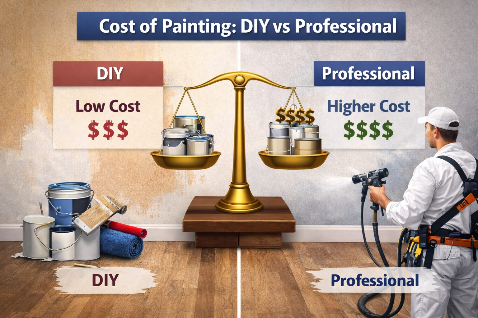
Bedroom Repaint
DIY:
- Cost: $170–$220
- Time: about 12 hours
Professional:
- Cost: $400–$600
- Time: 1 day
DIY offers savings with manageable effort.
Full Home Interior
DIY:
- Cost: $600–$900
- Time: 3–4 weekends
Professional:
- Cost: $4,500–$7,000
- Time: 5–7 days
Savings are significant, but the time commitment is much larger.
Exterior Repaint
DIY:
- Cost: $1,200–$1,800 including equipment
Professional:
- Cost: $4,000–$9,000
Exterior projects often justify professional work due to safety and preparation demands.
Getting Accurate Professional Quotes
When comparing painting quotes, confirm the following details:
- Paint brand and product line
- Number of coats included
- Preparation work covered
- Project timeline and crew size
- Proof of insurance and licensing
- Warranty on labor
Clear written agreements help avoid unexpected costs during the project.
Hybrid Approach: Combining DIY and Professionals
Many homeowners reduce costs by combining both approaches.
Common hybrid strategies include:
- Completing surface preparation personally
- Moving furniture before painters arrive
- Priming walls before professional application
- Hiring professionals for large, visible spaces only
This approach lowers labor costs while preserving professional finish quality where it matters most.
Conclusion
Choosing between DIY and professional painting depends on budget, time availability, project complexity, and desired finish quality.
DIY painting offers substantial savings for small projects and manageable spaces. Professional painting delivers faster completion, consistent results, and longer durability for larger or more complex work.
Understanding these trade-offs makes it easier to choose the option that best fits the project and the home.