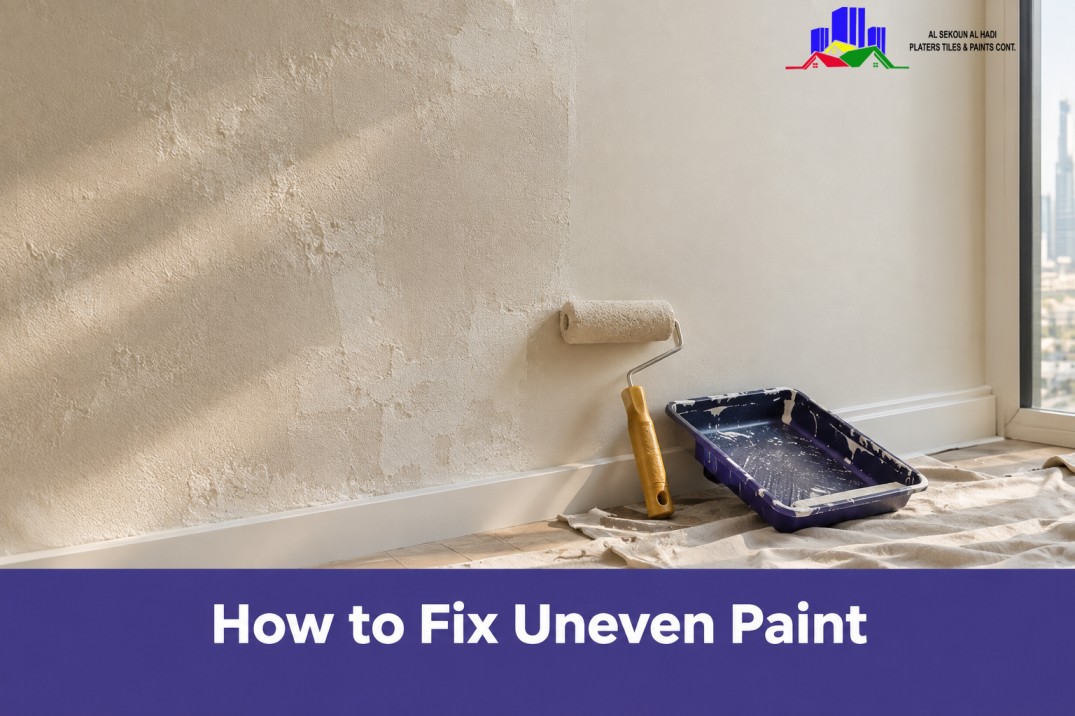
You painted your wall and it dried patchy. Some sections look darker, others look streaky, and the finish is nothing like the smooth result you expected. This is one of the most common painting problems in Dubai homes, and it happens for very specific reasons related to the local climate, wall materials, and preparation shortcuts.
This guide walks you through what causes uneven paint, how to fix it yourself, and when the problem is serious enough to need a professional.
Why Dubai Walls Are Prone to Uneven Paint
Most apartments and villas in Dubai use gypsum board or sand-rendered walls. Both materials absorb paint unevenly when not primed correctly. On top of that, air conditioning running year-round dries paint faster than normal, which causes roller marks and lap lines to set before the painter can blend them out. Fine desert dust that settles on walls also breaks paint adhesion and creates patches that catch light differently from the rest of the wall.
These problems show up whether you hire a paint contractor or do the job yourself. The cause is almost always preparation, not the paint itself.
What Causes Uneven Paint
Dubai homes have specific wall conditions that make uneven results more likely than in most other climates. Most apartments and villas use gypsum board or sand-rendered surfaces, both of which absorb paint unevenly when not primed correctly. Understanding the cause before touching the wall saves you from applying another coat and facing the same problem again.
Skipped or Insufficient Primer
Primer is the most skipped step in Dubai painting jobs, and it causes the most visible problems. Bare plaster, repaired patches, and previously unpainted sections absorb topcoat paint at a completely different rate from sealed surfaces. The result is sections that appear lighter, darker, or visibly different in sheen once the topcoat dries.
- Gypsum walls are especially porous and always need a primer coat
- Repaired cracks and filled holes must be spot-primed before topcoat
- Skipping primer is the leading cause of patchy walls in Dubai apartments
Paint Drying Too Fast in the Heat
Dubai’s heat and year-round air conditioning both cause paint to dry faster than it does in cooler climates. When one edge of a roller stroke dries before the next stroke overlaps it, a visible lap line sets permanently into the surface. South and west-facing rooms with direct afternoon sun are the most affected.
- Paint applied in direct sunlight through a window dries unevenly across each stroke
- Air-conditioned rooms with very low humidity accelerate drying on the surface before the coat levels
- Painting in the cooler morning hours reduces this risk significantly
Over-Diluted Paint
Some painters in Dubai dilute emulsion paint heavily to stretch a smaller quantity across a larger area. This creates a thin, translucent layer that shows every surface variation on the wall. Two coats of diluted paint never deliver the coverage of two properly mixed coats.
- Always check that your contractor specifies the paint-to-water ratio before work begins
- Heavily diluted paint appears uneven in both colour and sheen after drying
- Premium brands like Jotun and Dulux require minimal dilution and cover better per coat
Dirty or Dusty Walls
Dubai apartments accumulate fine airborne dust on wall surfaces continuously. Painting over a dusty surface breaks adhesion and leaves patches that catch light differently from the rest of the wall. Walls near kitchens carry grease residue that causes the same problem.
- Always wipe walls with a damp cloth and allow them to dry before painting
- Walls near AC vents collect the most dust and need the most thorough cleaning
- Grease near cooktops must be removed with a mild degreaser before any paint is applied
How to Fix Uneven Paint
If the uneven paint is limited to specific sections rather than spread across the entire wall, a targeted repair approach works well. Follow each step in order and do not skip preparation stages, as they are what determine whether the fix holds.
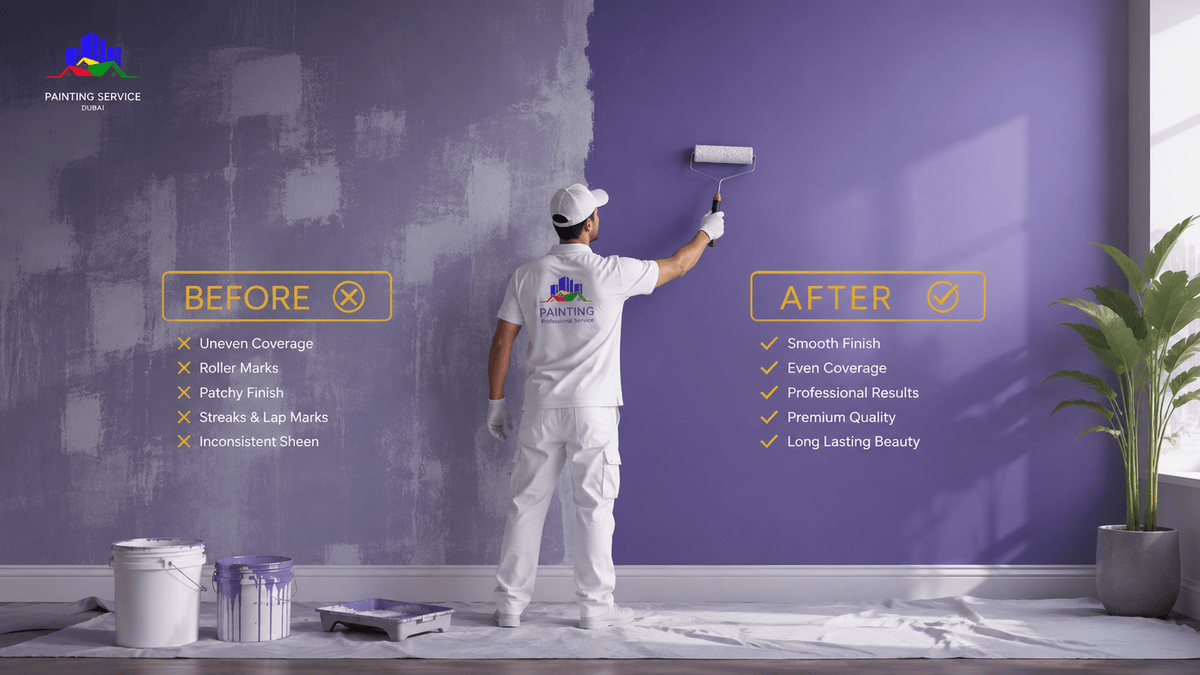
Step 1: Wait for the Paint to Cure
Do not judge a freshly painted wall on the same day. Water-based emulsion looks patchy and uneven for up to 72 hours while it cures and the sheen settles. Assess the wall after three full days before deciding it needs rework.
Step 2: Identify the Problem Under Raking Light
Switch off the main lights and hold a torch or lamp close to the wall at a sideways angle. This raking light technique reveals whether you are dealing with texture variation, colour patchiness, sheen inconsistency, or physical roller marks. Each type needs a slightly different approach.
Step 3: Sand the Problem Area
Use 180 to 220 grit sandpaper or a fine sanding sponge. Sand in gentle circular motions to flatten roller marks, lap lines, and any raised edges. Do not press hard enough to dig into the plaster. Wipe away all dust with a clean, slightly damp cloth and let the wall dry fully before moving to the next step.
Step 4: Prime the Patchy Sections
Apply a thin, even coat of PVA primer or the same primer used originally over the sanded areas. This step equalises surface porosity so the topcoat absorbs at the same rate across the entire wall. Allow the primer to dry completely, which takes at least one hour in a well-ventilated, air-conditioned room.
Step 5: Apply a Fresh Topcoat
Use the exact same paint, brand, batch, and finish as the original. Apply with a clean roller using consistent light pressure, working from the top of the wall downward in overlapping vertical strokes. Keep a wet edge at all times to prevent new lap marks from forming. Two thin coats produce a far better result than one thick coat.
Step 6: Check the Result in Multiple Lighting Conditions
View the finished wall in morning daylight, afternoon light, and under artificial lighting in the evening. Sheen inconsistency shows up most clearly under raking light at low angles. If the wall looks even across all three conditions, the job is done.
When a Touch-Up Will Not Work
Some uneven paint problems are too deep for a touch-up. If the paint is peeling or bubbling anywhere on the wall, moisture is getting in from behind. No topcoat will hold until the moisture source is fixed. If the wall has years of layered paint creating uneven texture all over, skim coating the full surface is the right fix before repainting.
If your Dubai apartment has walls that consistently look patchy after every repaint, the problem is almost certainly incomplete surface preparation from a previous job. Poor prep creates a surface that no amount of paint can smooth out.
In these situations, a professional assessment is worth more than another DIY attempt. The interior painting services carries out full surface inspection, crack filling, sanding, and priming before any paint is applied, which is exactly what stops uneven results from happening in the first place. If you are preparing an apartment for handover, the Alsekoun move-out painting service delivers a clean, inspection-ready finish that meets Dubai property management standards.