

You’ve packed the last box, handed over the keys, and now you’re waiting on a deposit that, in Dubai, could be anywhere from AED 5,000 to AED 50,000 or more. What happens next matters a lot. The move-out inspection is the moment your landlord decides how much of that money comes back to you, and most tenants go into it underprepared.
This guide walks you through exactly what landlords and property managers check, what deductions typically cost, and how to protect yourself when you disagree.
What Landlords Actually Check During a Move-Out Inspection
A move-out inspection is a systematic walkthrough of the property comparing its current condition against the state it was in when you moved in. Landlords (or their property managers) check for damage beyond normal wear and tear, cleanliness, missing or broken fittings, and any unauthorized alterations. They’ll typically work from a move-in condition report and, if they’re experienced, dated photographs taken at handover. The inspection usually takes 30 to 90 minutes depending on property size, and anything flagged gets priced against your deposit before a refund is issued.
The Room-by-Room Move-Out Inspection Checklist
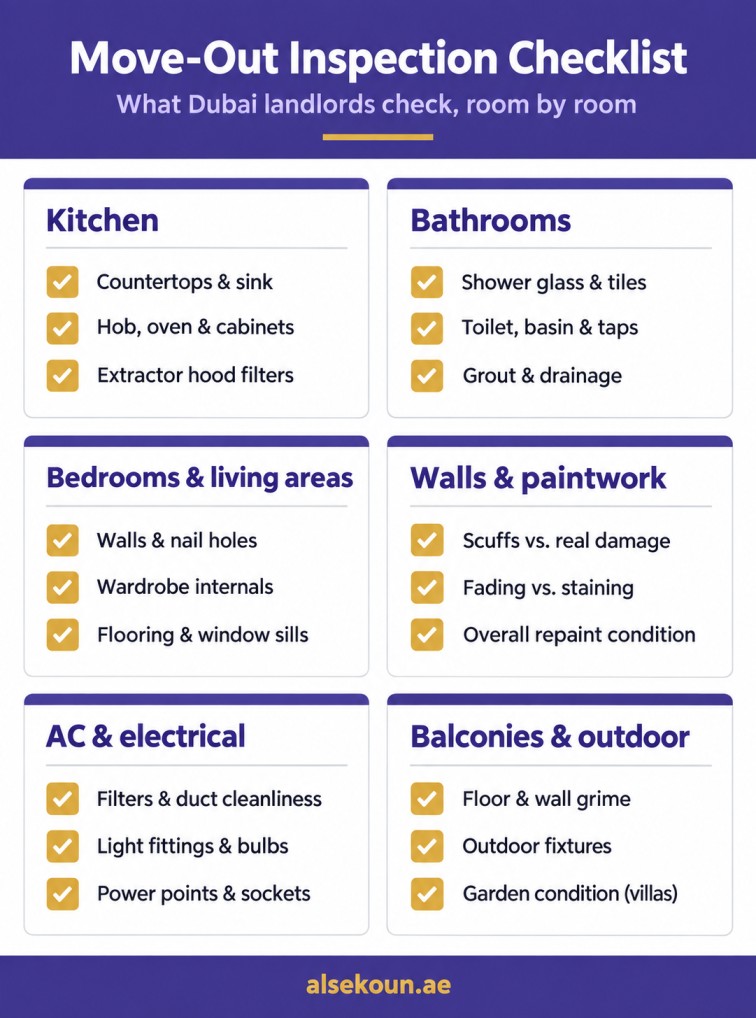
Kitchen
- Countertops: Scratches from knives, burn marks, or chips are chargeable. Surface-level dulling from daily use generally isn’t.
- Sink and taps: Check for limescale buildup, staining, and whether the drain runs freely. Rust spots on stainless steel sinks are often disputed. If they were there at move-in, you need photographic proof.
- Hob and oven: This is one of the most commonly flagged areas. Baked-on grease, broken burner caps, or a shattered glass hob will cost you. Professional oven cleaning in Dubai typically runs AED 150–300.
- Cabinets: Inspectors open every door and drawer. They’re looking for broken hinges, missing handles, staining on interior shelves, and whether the cabinet bases are clean.
- Extractor hood: Grease filters are checked. If they haven’t been cleaned in two years, expect a deduction.
Bathrooms
- Shower glass: Hard water staining that’s been left long enough to etch the glass is often charged as damage rather than wear. Regular squeegee use through your tenancy would have prevented it.
- Toilet: Limescale under the rim, cistern functionality, seat condition, and whether the flush mechanism works properly.
- Basin and taps: Staining, chips, and running taps all flagged.
- Tile grout: Black or pink mold in grout lines will be noted. This is a consistent deduction trigger in Dubai’s humidity.
- Drainage: Slow drains are tested. If a drain is blocked due to hair or buildup, that’s chargeable.
Bedrooms and Living Areas
- Walls: Scuffs, marks, and minor nail holes from picture hanging are in the grey zone (see wear and tear section below). Large holes, crayon marks, or staining are firmly chargeable.
- Wardrobe internals: Shelves, hanging rails, and internal lighting are all checked. Broken rails are a common deduction.
- Flooring: Scratches on marble, chips on tiles, and staining on carpets. Dragging furniture without felt pads is an expensive mistake that shows up clearly.
- Window sills: Dust and grime accumulation, rust on tracks, broken handles, and torn fly screens.
Walls, Ceilings, and Paintwork
This is where most deposit disputes start. Landlords will often quote a full repaint of the apartment, sometimes AED 3,000 to AED 8,000+ for a two-bedroom, even when only one wall needs attention, well above what professional move-out painting services in Dubai typically charge for the same scope. Yellowing, minor scuffs, and small nail holes after a two-plus year tenancy are generally considered wear and tear under UAE rental norms. A full repaint after a one-year tenancy with visible damage is more defensible.
AC, Electrical, and Fixtures
- AC units: Filters are almost always checked. Cleaning is expected before handover (AED 100–200 per unit typically). Duct cleaning is separate and significantly more expensive, AED 800 to AED 2,000 for an apartment, and landlords sometimes charge for it regardless of actual condition.
- Light fittings: Broken covers, missing bulbs, and non-functioning switches are noted.
- Power points: Loose sockets or covers that have been cracked or discolored.
Balconies and Outdoor Areas
Grime buildup on balcony floors and walls, broken outdoor fixtures, and, in villas, garden condition are all checked. If you had plants that damaged tile drainage or walls, that’s chargeable. Dead grass in a villa garden that was alive at move-in is a common dispute point.
Normal Wear and Tear vs. Chargeable Damage
Normal wear and tear is the gradual deterioration that happens through reasonable use over time. Small scuffs on walls, minor carpet flattening, faded curtains, and small nail holes (one or two, not a gallery wall’s worth) typically fall here. Damage caused by negligence, accidents, or misuse does not. A full breakdown with examples lives in our separate wear-and-tear guide, but the simple test is: would a reasonable person expect this to happen just from living here? If yes, it’s probably wear and tear.
What Common Deductions Actually Cost
Knowing the real numbers helps you negotiate rather than just accept whatever’s quoted.
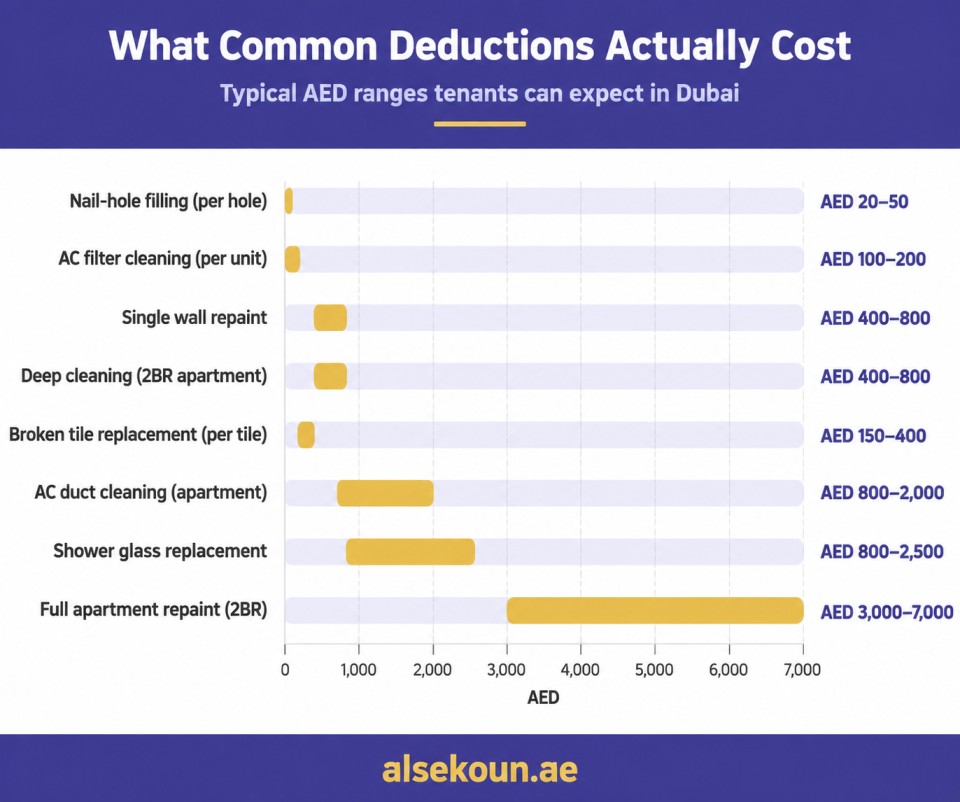
| Item | Typical AED Range |
| Nail-hole filling (per hole) | AED 20–50 |
| Single wall repaint | AED 400–800 |
| Full apartment repaint (2BR) | AED 3,000–7,000 |
| Deep cleaning (2BR apartment) | AED 400–800 |
| AC filter cleaning (per unit) | AED 100–200 |
| AC duct cleaning (apartment) | AED 800–2,000 |
| Broken tile replacement | AED 150–400 per tile |
| Shower glass replacement | AED 800–2,500 |
| Carpet cleaning/replacement | AED 300–2,000+ |
These figures vary by provider and area, and generally track the same per-square-meter painting rates seen across Dubai for interior repaint work. A landlord’s “go-to” contractor may quote significantly higher. That’s worth knowing before you sign any deduction agreement.
Run Your Own Pre-Inspection First
Do a full self-inspection 48 to 72 hours before the official one. That gives you time to fix small issues yourself, filling nail holes, replacing a blown bulb, or giving the oven a proper clean, rather than paying inflated contractor rates from a deduction.
Walk through every room with your original move-in report and a phone camera. Take video as well as photos. Note anything that you believe is wear and tear versus what genuinely happened during your tenancy. Be honest with yourself, since it makes your case stronger when it matters.
Address anything affordable and reversible yourself. An AED 30 tube of filler and 20 minutes of your time saves you from an AED 150–300 deduction on nail holes.
What to Bring to the Official Inspection
- Original move-in condition report, signed by both parties if possible
- Dated photographs from move-in day, since timestamped images are far more credible than undated ones
- Receipts for any maintenance or repairs you carried out during tenancy
- Your tenancy contract, particularly any clauses about handover conditions, painting obligations, or cleaning requirements
Don’t show up empty-handed expecting good faith alone to protect you.
During the Inspection: What to Do When You Disagree
If the landlord or property manager flags something you believe is either wear and tear or pre-existing damage:
- Say so clearly and calmly at the time, not after you’ve left the property.
- Write “disputed by tenant” next to any line item on the inspection report before you sign it. Never sign a report as though you agree with every line item if you actually don’t.
- Photograph the disputed item with the landlord present. This creates a record they know exists.
- Don’t sign a deduction agreement under pressure on the day. You have the right to review any proposed deductions before agreeing to them.
Why Landlord Repair Quotes Are Often Higher Than They Should Be
Landlords frequently use the same contractors repeatedly, and those contractors have little incentive to keep costs low, since they’re not competing for your business. A quote of AED 5,000 for repainting a two-bedroom flat may be entirely genuine, or it may reflect a contractor benefiting from a comfortable markup and a steady referral relationship with the landlord.
Getting an independent quote from a professional painting service provider gives you a real benchmark, and it’s worth understanding generally how professional painting pricing compares to a DIY attempt before you accept any number at face value. If your landlord’s quote is AED 5,500 and an independent assessment puts the same work at AED 2,800, that’s a documented negotiating position, not just your word against theirs.
How Long Does the Deposit Refund Take, and What If It’s Delayed?
There’s no single legally mandated timeline in Dubai for deposit refunds beyond what’s written in your tenancy contract. In practice, most landlords aim to settle within 30 days of the inspection. Many don’t hit that.
If your deposit is being delayed without clear reason:
- Send a formal written request via email or WhatsApp (documented messaging) citing your tenancy contract terms.
- Give a clear deadline, typically 7–14 days, before escalating.
- If it’s still not resolved, you can file with the Rental Disputes Centre (RDC) at the Dubai Land Department.
Unreasonable withholding of a deposit without a justified deduction breakdown is actionable.
If You Disagree: Filing With the Rental Disputes Centre
The RDC handles landlord-tenant disputes including deposit disagreements. Here’s what to know:
- Filing is done online or in person at the Dubai Land Department
- Filing fees are typically 3.5% of the disputed amount (minimum AED 500)
- Cases are often resolved within 7–15 working days through an initial amicable settlement session
- A significant proportion of cases, anecdotally around 60–70%, are settled at the amicable stage without going to a full hearing
- If amicable settlement fails, a formal judgment is issued; this can take several additional weeks
The process is designed to be accessible to tenants, not just landlords. Having your documented evidence, photos, inspection reports, independent quotes, dramatically strengthens your position.
Apartment vs. Villa Inspections: What’s Different
For apartments, the inspection is largely interior-focused, covering walls, kitchen, bathrooms, flooring, fixtures, and AC, which is why interior painting tends to be the most common pre-handover fix apartment tenants arrange. Common deductions cluster around cleaning, paintwork, and AC servicing.
For villas, the inspection scope expands considerably:
- Garden and landscaping condition is assessed. Dead plants, damaged irrigation systems, and unkempt lawns are charged.
- External walls and paintwork may be checked if they fall under tenant responsibility, though exterior painting for villas involves different weatherproofing considerations than interior walls.
- Pools (if private) are inspected for equipment functionality and water quality.
- Garages and storage areas are included.
- Roof access areas in some properties.
Villa deposits are also typically higher, making disputes proportionally more costly. If you’re moving out of a villa, budget more time for both your self-inspection and the official one.
Frequently Asked Questions
What should be on a tenant move-out inspection checklist? Your checklist should cover every room in detail: walls, floors, fixtures, appliances, windows, doors, outdoor areas, and all utilities. Bring your move-in report and use it as your baseline.
Is a move-in/move-out checklist legally required in Dubai? It’s not explicitly mandated by law but is standard practice and strongly advisable. Without a move-in condition report, both parties lose their most important piece of evidence.
Do I have to repaint the apartment when I move out? Not automatically. Repainting obligations depend on what your tenancy contract says, how long you’ve lived there, and the actual condition of the walls. A full repaint after a four-year tenancy with normal use is rarely a reasonable charge.
What is “move-out painting” and when is it charged? Move-out painting refers to repainting walls either because of visible damage (staining, holes, crayon marks) or because the contract explicitly requires it at handover. If neither applies, you can dispute a painting charge.
Can a landlord keep my full deposit? Only if documented deductions equal or exceed the deposit amount. A landlord cannot simply withhold a deposit without providing an itemized breakdown of charges. If they do, that’s actionable at the RDC.
How do I do a move-out inspection myself? Use a printed room-by-room checklist, walk every space, photograph everything with timestamps, and compare against your move-in documentation. Do this 48–72 hours before the official inspection so you have time to fix small issues.
What happens if there was no move-in inspection report? This weakens both parties’ positions. Without baseline documentation, it becomes a credibility contest. Dated photos from move-in day can substitute partially. The RDC will weigh available evidence and apply reasonable standards.
The deposit refund process doesn’t have to be a fight, but it does reward tenants who show up prepared. Document everything, know your numbers, and don’t agree to deductions you haven’t verified. Your money is worth the extra hour of due diligence.